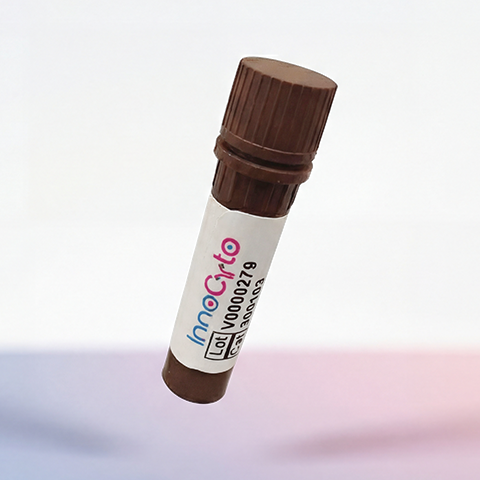
| Cat # | Size | Price | Quantity | |
|---|---|---|---|---|
| 670401 | 5 μg | ¥440 | ||
| 670402 | 100 μg | ¥3,730 |
| Application | Bioassay |
|---|---|
| Format | Lyophilized from sterile PBS, pH 7.4. |
| Expression Host | E.coli |
| Target Name | IL-4,interleukin-4, B cell growth factor 1 (BCGF-1), B-cell stimulatory factor 1 (BSF-1), lymphocyte stimulatory factor 1, |
| Species | Mouse |
| accession number | NP_067258.1 |
| Sources | A DNA sequence encoding the mouse IL4 (NP_067258.1) (His23-Ser140) was expressed with a N-terminal Met. |
| Molecular Weight | The recombinant mouse IL4 consists of 119 amino acids and predicts a molecular mass of 13.4 KDa. It migrates as an approximately 14 KDa band in SDS-PAGE under reducing conditions. |
| Affinity Tag | None |
| Purity | > 90 % as determined by SDS-PAGE. |
| Regulatory Status | RUO |
| Endotoxin level | < 1.0 EU per μg protein |
| Protein Concentration | Lyophilized |
| Storage and Handling | Samples are stable for up to twelve months from date of receipt at -20℃ to -80℃. Store it under sterile conditions at -20℃ to -80℃. It is recommended that the protein be aliquoted for optimal storage. Avoid repeated freeze-thaw cycles. |
Mouse interleukin-4 (IL-4) is a pleiotropic cytokine that plays a central role in type 2 immunity, allergic inflammation, and immune-cell differentiation. It is produced primarily by activated T helper 2 (Th2) cells, as well as mast cells, basophils, eosinophils, and other immune-cell populations under appropriate conditions. IL-4 promotes the differentiation of naïve CD4+ T cells into Th2 cells, supports B-cell proliferation and antibody class switching to IgG1 and IgE in mice, and influences macrophage polarization toward an alternatively activated, M2-like phenotype. These activities contribute to parasite defense, tissue repair, and regulation of inflammatory responses.
Mouse IL-4 is a secreted cytokine belonging to the type I cytokine family. Its mature protein is approximately 120 amino acids long and adopts a characteristic four-alpha-helix bundle structure. IL-4 signals through two receptor complexes: the type I receptor, composed of IL-4 receptor alpha (IL-4Rα) and the common gamma chain (γc/CD132), and the type II receptor, composed of IL-4Rα and IL-13 receptor alpha 1 (IL-13Rα1). IL-4 binds IL-4Rα as its primary receptor-binding component, enabling recruitment of the second receptor chain and activation of intracellular signaling, particularly the JAK–STAT6 pathway.
Dysregulated IL-4 signaling contributes to allergic diseases, including asthma, atopic dermatitis, and food allergy, by promoting IgE production, Th2 responses, and mucus-associated inflammation. Excessive type 2 immunity may also contribute to fibrosis and certain tumor-associated immune environments. Conversely, IL-4 supports protective responses against helminth parasites and can promote tissue repair.
Therapeutically, IL-4 signaling is an important target in allergic and inflammatory disease. Blocking IL-4Rα can inhibit signaling by both IL-4 and IL-13, reducing type 2 inflammation. Mouse IL-4 is widely used in preclinical research to investigate Th2 differentiation, macrophage biology, allergic disease mechanisms, and potential immunomodulatory therapies.
Recombinant Mouse IL-4 Protein TDS
Have a product or application question? Consult our FAQs or contact us.