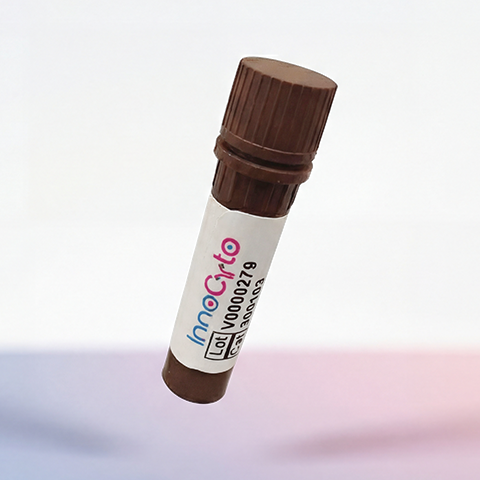
| Cat # | Size | Price | Quantity | |
|---|---|---|---|---|
| 670701 | 50 μg | ¥2,205 |
| Application | Bioassay |
|---|---|
| Format | Lyophilized from sterile PBS, pH 7.4. |
| Expression Host | HEK293 |
| Target Name | TrkB, Neurotrophic tyrosine kinase receptor type 2, GP145-TrkB |
| Species | Mouse |
| accession number | P15209-2 |
| Sources | A DNA sequence encoding the extracellular domain of mouse NTRK2 (P15209-2) (Met 1-His 429) was expressed, with a C-terminal polyhistidine tag. |
| Molecular Weight | The secreted recombinant mouse NTRK2 consists of 409amino acids and has a calculated molecular mass of 46 KDa. The apparent molecular mass of rm NTRK2 is approximately 75-85 KDa in SDS-PAGE under reducing conditions. |
| Affinity Tag | C-His |
| Purity | ≥95% as determined by SDS-PAGE. |
| Regulatory Status | RUO |
| Endotoxin level | < 1.0 EU per μg protein |
| Protein Concentration | Lyophilized |
| Storage and Handling | Samples are stable for up to twelve months from date of receipt at -20℃ to -80℃. Store it under sterile conditions at -20℃ to -80℃. It is recommended that the protein be aliquoted for optimal storage. Avoid repeated freeze-thaw cycles. |
Neurotrophic tyrosine kinase (NTRK) receptors are a family of receptor tyrosine kinases essential for nervous system development, neuronal survival, differentiation, and synaptic plasticity. The family includes three members: NTRK1 (TrkA), NTRK2 (TrkB), and NTRK3 (TrkC). These receptors regulate neuronal growth, maintain neural connections, and support the function of sensory and central nervous system neurons. Beyond neural biology, NTRK signaling can influence cell proliferation, survival, and differentiation in other tissues.
NTRK receptors are single-pass transmembrane glycoproteins composed of an extracellular ligand-binding region, a transmembrane segment, and an intracellular tyrosine kinase domain. Their extracellular regions contain leucine-rich repeats and immunoglobulin-like domains involved in ligand recognition and receptor interactions. Binding of a neurotrophin promotes receptor dimerization and autophosphorylation, initiating downstream signaling pathways such as RAS–MAPK, PI3K–AKT, and PLCγ. These pathways regulate gene expression, neuronal survival, differentiation, and synaptic function.
The three receptors have distinct but overlapping ligand preferences. NTRK1 primarily binds nerve growth factor (NGF), NTRK2 binds brain-derived neurotrophic factor (BDNF) and neurotrophin-4 (NT-4), and NTRK3 preferentially binds neurotrophin-3 (NT-3). Ligand specificity is not absolute, as NT-3 can activate other Trk receptors under certain conditions. Neurotrophins may also interact with the p75 neurotrophin receptor, which can modify signaling outcomes.
Altered NTRK signaling is associated with neurological conditions, including sensory and pain disorders, as well as developmental abnormalities. In cancer, chromosomal rearrangements involving NTRK genes can generate oncogenic fusion proteins that retain the kinase domain and drive constitutive signaling. These NTRK fusions occur across multiple tumor types and can promote uncontrolled cell growth and survival.
Therapeutically, selective TRK inhibitors, including larotrectinib and entrectinib, are used to treat eligible cancers harboring NTRK gene fusions. Research also explores modulation of neurotrophin–Trk signaling to support neuronal protection, regeneration, and treatment of neurological disorders.
Recombinant Mouse TrkB Protein (His Tag) TDS
Have a product or application question? Consult our FAQs or contact us.