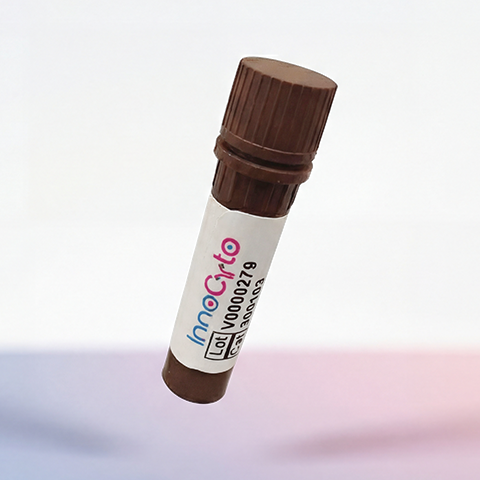
| Cat # | Size | Price | Quantity | |
|---|---|---|---|---|
| 208001 | 100 µg | ¥540 | ||
| 208002 | 500 µg | ¥1,695 |
| Clone | TY25 |
|---|---|
| Application | Flow Cytometry, IHC-F, WB, IP |
| Reactivity | Mouse |
| Format | Purified |
| Target Name | CD273, PD-L2, PDL2, B7DC |
| Isotype | Rat IgG2a |
| Antibody Type | Monoclonal |
| Regulatory Status | RUO |
| Formulation | Phosphate-buffered solution, pH 7.2, containing 0.09% sodium azide |
| Protein Concentration | 0.5 mg/mL |
| Storage & Handling | The antibody solution should be stored between 2°C and 8°C |
| Recommended Usage | For flow cytometric staining, it is recommended to use less than 0.2 µg of this reagent per 0.5-1.0 million cells in a 100 µL volume. Optimal reagent performance should be determined by titration for each specific application |
| See All Formats | Clone TY25 |
Mouse CD273, also known as programmed death-ligand 2 (PD-L2) or B7-DC, is an immune checkpoint ligand encoded by the Pdcd1lg2 gene. It is primarily expressed on antigen-presenting cells, including dendritic cells and macrophages, and can be induced by inflammatory and Th2-associated cytokines. CD273 plays an important role in regulating T-cell responses and maintaining immune tolerance. Through interaction with its receptors, it can suppress T-cell proliferation and inflammatory cytokine production, although its effects can vary depending on the cellular and tissue context.
Mouse CD273 is a type I transmembrane glycoprotein belonging to the B7 family. Its extracellular region contains an N-terminal immunoglobulin variable (IgV)-like domain followed by an IgC-like domain, a transmembrane segment, and a very short cytoplasmic tail. Notably, mouse and rat PD-L2 have only approximately four amino acids in the cytoplasmic region, whereas human PD-L2 contains a substantially longer cytoplasmic domain. The extracellular IgV domain forms the principal binding interface with its receptors.
The best-characterized ligand/receptor interaction is with programmed cell death protein 1 (PD-1/CD279) on activated T cells. PD-L2 binds PD-1 with higher affinity than PD-L1 and delivers inhibitory signals that limit T-cell activation. CD273 also binds repulsive guidance molecule B (RGMb), a GPI-anchored protein expressed on several immune-cell populations. The PD-L2–RGMb pathway has been implicated particularly in respiratory immune tolerance and regulation of tissue-specific immune responses.
CD273 has been implicated in cancer, allergy, asthma, chronic inflammation, and infectious disease through its ability to regulate immune activation. In mouse tumor models, PD-L2–RGMb signaling can contribute to resistance to PD-1/PD-L1 checkpoint blockade. Therapeutically, CD273 is therefore being investigated as an additional immune-checkpoint target. Blocking PD-L2 or the PD-L2–RGMb interaction can enhance antitumor immunity in preclinical models, particularly when combined with PD-1 or PD-L1 inhibitors. Conversely, enhancing PD-L2 signaling may have potential for treating excessive inflammatory or autoimmune responses by promoting immune tolerance.
Rat IgG2a Isotype Control Antibody
Anti-Mouse CD273 (B7-DC, PD-L2) Antibody TDS
Have a product or application question? Consult our FAQs or contact us.