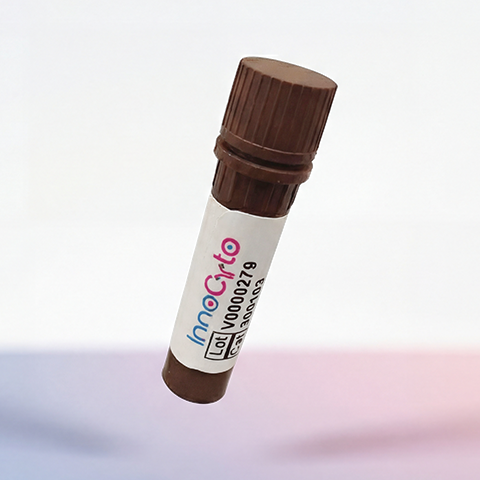
| Cat # | Size | Price | Quantity | |
|---|---|---|---|---|
| 208103 | 25 µg | ¥1,490 | ||
| 208104 | 100 µg | ¥3,050 |
| Clone | FIB27 |
|---|---|
| Application | Flow Cytometry |
| Reactivity | Mouse, Human |
| Format | iF647 |
| Target Name | Integrin β7, β7 Integrin, integrin βp, ITGB7 |
| Isotype | Rat IgG2a |
| Antibody Type | Monoclonal |
| Regulatory Status | RUO |
| Formulation | Phosphate-buffered solution, pH 7.2, containing 0.09% sodium azide and 0.2% (w/v) BSA |
| Protein Concentration | 0.2 mg/mL |
| Storage & Handling | The antibody solution should be stored undiluted between 2°C and 8°C, and protected from prolonged exposure to light. Do not freeze. |
| Recommended Usage | For flow cytometric staining, it is recommended to use less than 0.2 µg of this reagent per 0.5-1.0 million cells in a 100 µL volume. Optimal reagent performance should be determined by titration for each specific application. iF647 has an excitation max at 656 nm and an emission max at 670 nm. |
| Excitation Laser | Red Laser (633 nm) |
| See All Formats | Clone FIB27 |
Human and mouse integrin β7 (ITGB7) is a leukocyte adhesion receptor subunit that regulates immune-cell trafficking, adhesion, and retention, particularly at mucosal surfaces. β7 does not function alone but forms heterodimers with two α subunits: α4β7 and αEβ7 (CD103). α4β7 is expressed prominently on gut-homing lymphocytes and mediates their migration from the circulation into intestinal tissues, whereas αEβ7 contributes to retention of lymphocytes within epithelial compartments. :contentReference[oaicite:0]{index=0}
β7 is a type I transmembrane integrin protein containing a large extracellular domain, a single transmembrane helix, and a short cytoplasmic tail involved in intracellular signaling. Like other integrins, β7-containing heterodimers undergo conformational changes that regulate ligand affinity and transmit bidirectional signals between the extracellular environment and the cytoskeleton. The principal ligand for α4β7 is mucosal addressin cell adhesion molecule-1 (MAdCAM-1), which is highly expressed on endothelial cells in intestinal tissues. α4β7 can also interact with VCAM-1 under certain conditions. The principal ligand for αEβ7 is E-cadherin on epithelial cells. :contentReference[oaicite:1]{index=1}
β7-mediated trafficking and retention are physiologically important for intestinal immune surveillance but can contribute to chronic inflammation. Increased α4β7–MAdCAM-1 interactions promote recruitment of inflammatory lymphocytes into the intestinal mucosa in Crohn’s disease and ulcerative colitis. αEβ7–E-cadherin interactions can additionally promote retention of activated lymphocytes within intestinal epithelium. β7-positive immune cells and their ligands have also been implicated in other inflammatory disorders, although evidence varies among diseases. :contentReference[oaicite:2]{index=2}
Because β7 controls mucosal immune-cell trafficking, it is an important therapeutic target. Vedolizumab selectively targets α4β7 and blocks its interaction with MAdCAM-1, providing gut-selective immunomodulation and established treatment for inflammatory bowel disease. Anti-β7 approaches such as etrolizumab target both α4β7 and αEβ7, potentially inhibiting both lymphocyte recruitment and epithelial retention. Thus, β7 represents an attractive target for developing therapies for inflammatory and autoimmune diseases involving pathological mucosal immune-cell trafficking. :contentReference[oaicite:3]{index=3}
iF647 Rat IgG2a Isotype control
iF647 Anti-Mouse/Human integrin β7 Antibody TDS
Have a product or application question? Consult our FAQs or contact us.